Blog

  • To receive the payment of your pension on a non-Swiss bank

    The Pension Fund informed us about the possibility for a pensioner domiciled outside Switzerland to receive the transfers of his pension to a non-Swiss bank insofar as this bank has a branch in Switzerland.

    The essential rule for the Pension Fund to make such transfers is that the IBAN (International Bank Account Number) of the bank account to which the transfer is to be made begins with the letters CH.

    European banks having a Swiss subsidiary and agreeing to open an account with an IBAN of the type CH… … for a pensioner domiciled outside Switzerland can be accepted by the Pension Fund’s payment system.

    Some examples are known.

    If you are having difficulty opening an account, you have the opportunity to become a member of the association AMFIE, the financial cooperative association of international civil servants.

    Based in Luxembourg, this association offers services similar to those of a bank (credit card, savings, etc.). Many beneficiaries have already found this solution very practical.

    Once the beneficiary is a member of AMFIE, the pension will be paid into that account in Switzerland and in Swiss francs.  Then it is possible to transfer the amount (automatically if desired) to another account in another currency of corresponding banks.

    Full details on membership and financial services are available at: http://www.amfie.org

  • General Assembly 28th of March

    The next General Assembly will take place Tuesday the 28th of March as of 15:00 in the Bdg. 500, Main Auditorium

    Convocation

    https://www.gac-epa.org/Communications/AGMs/2023-03-28-AGM-EGM/Convocation-AGM-en.html

  • Tribute Bachy-Lamprecht-Magnin

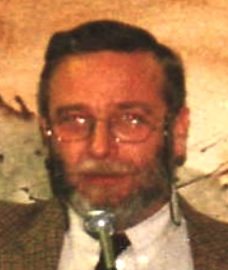
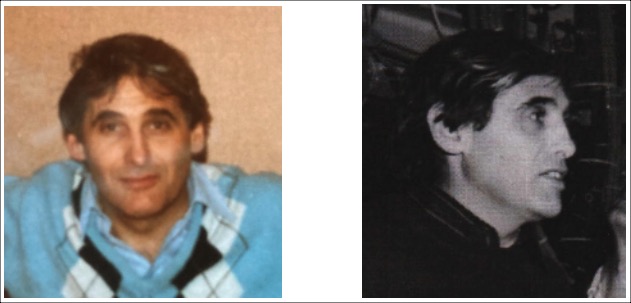
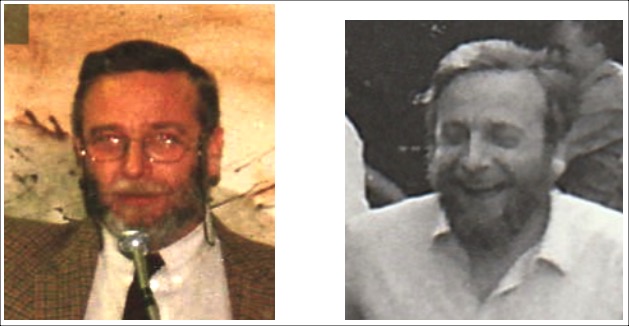
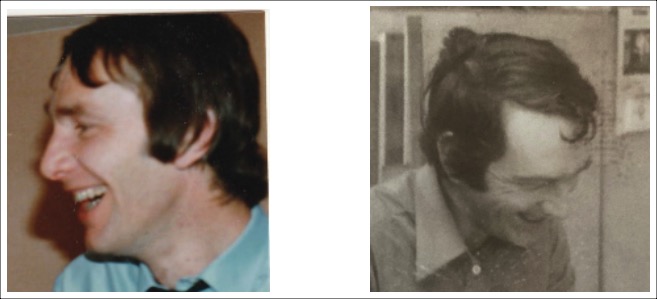
    Tribute Bachy-Lamprecht-Magnin

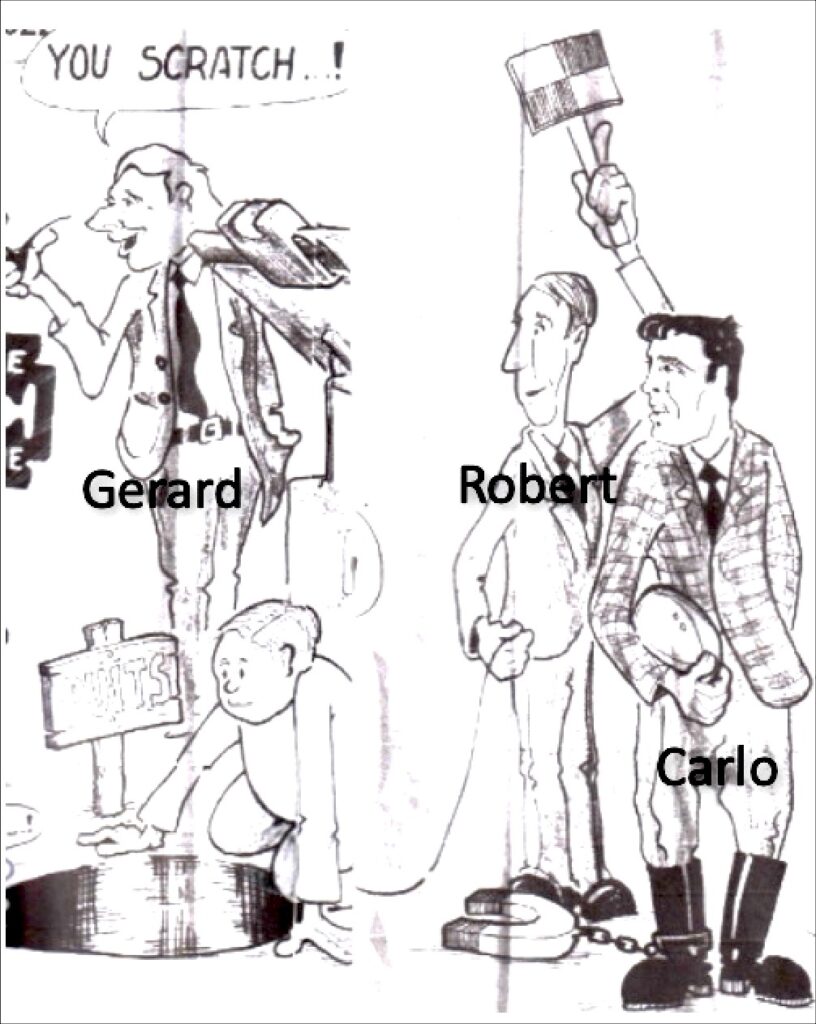
    Carlo LAMPRECHT left us on 20 April 2022
    Gérard BACHY left us on 26 April 2022
    Robert MAGNIN left us on 4 May 2022

    “BACHY’S TEAM” created in 1973 and which would become the group “INSTALLATION”

    IT’S FINISHED !!!

    After Georges DUBAIL, who left us on 17 December 2009 the rest of the “Three Musketeers” joined him this year and in a very short time.

    Is there perhaps a project for a large accelerator to be installed up there ???

    “See you Up There”

    All our best thoughts go out to their families

    From all their colleagues and friends at CERN

    In 1973 all three were “caught” by a cartoonist !!

    JF Michaud

  • COVID and CERN

  • Tribute Günther Plass

    Tribute Günther Plass

    Günther Plass, former CERN director of accelerators who made decisive contributions to the development and successful operation of many of CERN’s large facilities, passed away on 11 December, aged 90.

    Günther joined CERN in 1956, participating in the construction of the Proton Synchrotron (PS) as a member of the magnet group.  With Berend Kuiper, he led the development of the machine’s novel fast-ejection system, shaped the massive PS improvement programme launched in 1965 and, later, oversaw the construction of the new Linac2.

    Günther also left his mark as the author, together with Colin Ramm as early as 1961, of a suggestion to construct the SPS near the Meyrin site.

    Günther was among those proposing the Low-Energy Antiproton Ring (LEAR), which, after modifications, is now a key component of the LHC ion programme as the Low- Energy Ion Ring (LEIR).

    He displayed the full measure of his talent as deputy to Emilio Picasso, the LEP project leader, from 1981 onwards and from 1983 as LEP division leader.

    As director of accelerators from 1990, he lent full support to the upgrade of LEP by means of superconducting cavities, which extended its energy reach from the Z° to the W+W– threshold and above, and he strongly encouraged the studies that would ensure the future of CERN, such as those for the LHC and CLIC.

    Günther’s success was due to his unassuming character, his patience and ability to listen, his open and calm mind in the face of adversity, and his ability to identify the essential points and the right people for a task or project.

    Kurt Hübner and Carlo Wyss

  • Tribute Horst Wenninger

    Tribute Horst Wenninger

    As a CERN director, former president of GAC-EPA Horst Wenninger played key roles in the approval of the LHC and in firmly establishing knowledge transfer at CERN.

    A newly promoted middle manager at CERN was angry.  Some of the personnel he had inherited was not performing and he would not be able to deliver equipment on-time and on-budget as he had promised.  Irate, he had to complain.  Twenty minutes later he came out from his boss Horst Wenninger’s office, calm and content.  There were good reasons for Horst to have earned the epithet “Mr. Valium”. 

    Top-flight physicists and those aspiring to be so, would seek out Horst to get advice and help.  He was universally trusted, because he was not going to steal their ideas and was not considered a threat.  He knew his way around CERN like no-one else, and whom to contact to get things done (and crucially how to get them to do it). 

    Before becoming a physicist, Horst had considered becoming a diplomat.  Somehow, he managed to combine the two professions, all in the interest of CERN.  He cultivated the art of connecting scientists, engineers, and administrators — always with the aim of achieving a goal. 

    Horst was born in Wilhelmshaven in 1938, the third child of a naval officer.  His early childhood was spent with his mother and three siblings near Dresden.  When the war ended, the family settled in Heilbronn (Baden Württemberg).  He met his wife and started his family while studying at Heidelberg University, where he earned his PhD in nuclear physics in 1966.  In 1968 he joined CERN to participate in the Big European Bubble Chamber (BEBC).

    From the outset Horst was inspired by CERN.  It satisfied both his interest in physics and his penchant for diplomacy.  He saw the importance of the laboratory for establishing peaceful worldwide collaboration and relished in participating in the adventure.

    Unsurprisingly, Horst was soon identified as a leader, first as physics coordinator for the BEBC programme in 1974.  In 1980 he went to DESY to work on electron-positron collider physics in preparation for LEP, returning to CERN in 1982 to lead the BEBC group.  In 1984 he became head of the Experimental Facilities (EF) Division, providing support for Omega, UA1 and UA2.  For the R&D and construction of the LEP detectors Horst needed to implement a new style of collaboration: for the first time, major parts of the detectors had to be financed, developed and provided by outside groups with central CERN coordination.  In 1990 he became leader of the Accelerator Technologies (AT) Division, comprising the major technology groups working on LEP2, R&D on superconducting magnets for LHC, and LHC-specific technologies such as vacuum and cryogenics.  In 1993 as LHC deputy project leader, his profound knowledge of CERN, and what would be possible in the way of cost reductions and inevitable manpower cuts, was vital for the reassessment of the LHC project. 

    Horst was CERN Research and Technical Director from 1994 to 1999.  LHC approval was expected in 1994.  However, the day before the crucial vote by the CERN Council in December that year, the German delegation was still not authorized to vote its support.  In a late-night action Horst managed to arrange a contact with the office of the German chancellor with the mission to sway the responsible minister.  His cryptic reaction was conveniently interpreted by the supportive German delegate as a green light, a determined move for the good of CERN.  Horst was later awarded the Order of Merit of the German Republic.

    In 2000 he helped launch the CERN Technology Transfer (TT) division and chaired the Technology Advisory Board.  He was also instrumental in the execution at CERN of the Italian LAA initiative for LHC detector R&D.  Thanks largely to his drive the 2017 book “Technology Meets Research – 60 Years of CERN Technology: Selected Highlights” was published, a tribute to the importance he associated with technology in the life of CERN.

    Horst retired from CERN in 2003, but he continued making major contributions, thanks to his broad physics, technology and management experience and his international network.  GSI, Darmstadt had recently embarked on the FAIR project — much larger than any previous undertaking at that laboratory.  Horst was asked to help: his singular talents were essential, even vital, in charting a common way forward at a time, when science, technology and politics pulled in different directions.  He was instrumental in arranging the help of substantial CERN accelerator expertise, and later, as the facility relied on major international “In-Kind” contributions, it naturally fell to Horst to take on the associated complex and delicate organization and procurement.  When in 2019 the EU approved the “South East European International Institute for Sustainable Technologies” (SEEIIST), Horst was appointed to coordinate Phase1.

    In parallel with his scientific and diplomatic activities, Horst even found time to be vice-president, then president of GAC-EPA and delight us all with his lively speeches at the annual assemblies.  During his term of office, pensioners, who were represented as mere observers on the Pension Fund Governing Board, were granted a seat with full rights but this required the establishment of an association formally including both CERN and ESO beneficiaries of the CERN Pension Fund.  Horst was the right man in the right place.  He is remembered by the GAC-EPA committee for his affable yet firm and efficient leadership.

    Horst put his mark on CERN.  The wider community also benefited immensely from his contributions in advisory roles throughout his active life.  We have lost an outstanding colleague, and a good friend from whose enthusiasm, advice, and wisdom we all benefited tremendously.

    He is survived by his wife, Gisela.

    His friends and colleagues

  • Tribute Albert Hofmann

    Tribute Albert Hofmann

    Albert Hofmann died on the night of 28 December 2018. We all had the good fortune to share time with this wonderful person and were deeply saddened to hear of his untimely death.

    Albert finished his studies at ETH Zurich in the mid-sixties and then went on to work at the Cambridge Electron Accelerator (CEA) at Harvard University. The team at CEA was a highly reputed one, including names like Gus Voss and Herman Winick. We used to joke with Albert saying that, according to him, everything associated with accelerators was invented at CEA. He left CEA and came to the CERN ISR in 1973, joining the ISR Accelerator Theory group, where he made seminal contributions to the performance of this collider. When the ISR was closed, Albert returned to California to work on the SLC damping rings and on SPEAR. He was invited to return to CERN in 1989 to take joint responsibility for the commissioning of LEP. Albert made remarkable contributions to the performance of LEP throughout its operating lifetime of eleven years. He subsequently returned to California to work with Ron Ruth on a compact light source developed by Lyncean Technologies.

    Albert was an inspiration, a mentor and a role model for everyone who worked with him. He was world-renowned as a brilliant accelerator physicist and, just as importantly, he was a kind, sweet person.

    We witnessed on many occasions how younger staff were magnetically attracted to Albert for his simplified explanations of complicated physics issues. He gave many inspiring lectures at the CERN Accelerator School, simplifying, as only he could, some of the most difficult concepts in accelerator physics.

    He also wrote his monumental book on synchrotron radiation. He was such a perfectionist that he often expressed his fear that this book would never be finished, as he wanted to include all the new ideas that were continuously being invented.

    He was always over-generous in giving scientific credit to colleagues who had in some cases only made a minor contribution. Albert also had an impish, tongue-in-cheek sense of humour and told fascinating stories about his childhood and about the early days of colliders.

    We feel an acute sense of loss as we say goodbye to this generous, modest, inspiring and unpretentious role model.

    His colleagues and friends

  • Tribute Susanne Muratori

    Tribute Susanne Muratori

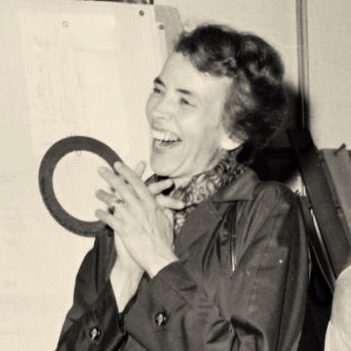
    Susanne Muratori passed away on 2 May 2018.

    Sad news for members of the former Track Chamber (TC), Experimental Facilities (EF), and the Accelerator Technology (AT) Divisions.

    Susanne Muratori joined the adventure of the formative years of CERN in 1955 following her studies at the “Ecole d’Interpretes”. She was first recruited at the Purchasing Office, and later moved to the PS Division. She joined the then newly created Track Chamber Division in 1961 (previously a Group in the PS Division). She soon became the head and soul of secretarial administration for the three above successive Divisions. Before retirement she joined the CERN Directorate as administrative personal assistant.

    Colleagues at CERN, as well as numerous visiting CERN scientists, will remember Susanne for her great professionalism, her constant concern for other people and the warm and humorous way in which she tackled and solved problems, private or work related.

    Susanne will be fondly remembered as an intelligent, profoundly human and exceptional “Cernoise”.

    Her passion for classical music lead to the foundation of the CERN Music Club in collaboration with the former CERN Director General Victor Weisskopf.

    Our sincere condolences go to her husband Giovanni and her son Bruno and family.